

I’ve spent my career working in situations where the problem is real, the path forward isn’t obvious, and progress depends on how well different parts of a system can be understood and aligned.
What has consistently driven me is not a single discipline or role, but the space between them—where technical choices affect operations, where institutional constraints shape what is feasible, and where decisions have consequences that don’t neatly stay in one box.
That perspective didn’t come from theory. It was shaped by experience.
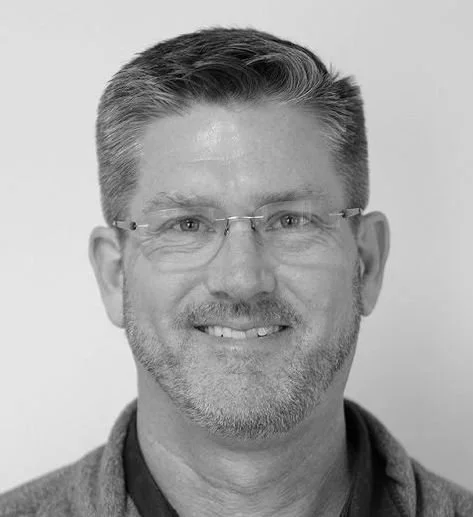
Ralph Matlack
How my perspective was shaped
Learning to think in systems
My early career in naval architecture introduced me—long before I had language for it—to systems thinking. I learned how a choice in one domain could ripple into others: structure, stability, operations, safety, cost.
What I didn’t recognize at the time was how much I enjoyed that cross-disciplinary literacy, and how naturally I gravitated toward stitching pieces together so the whole worked better than any individual part.
Ironically, what eventually pushed me out of naval architecture was not the work itself, but the constraints around it. Narrow roles, slow-moving bureaucratic environments, and limited room to act made it clear that I wanted to operate closer to decisions and closer to outcomes.
Early entrepreneurship: building from nothing and serving customers
My early years as an entrepreneur taught me two foundational lessons.
First, that it is possible—always with others, never alone—to take something from nothing to something real. To identify an unsolved problem, invent a solution, and move forward despite limited resources and no guarantee of success.
“Whatever you can do, or dream you can, begin it. Boldness has genius, power, and magic in it.”
Second, I learned what it actually means to serve customers. Those years were defined by long hours, all-nighters, and doing whatever was required to deliver on commitments. That experience permanently shaped how I think about responsibility, accountability, and trust.
Product leadership at scale
In later product leadership roles at companies like Inuit and OpenTable, I deepened those lessons.
I learned how to practice customer empathy in a disciplined way, keeping the user’s perspective central while navigating business, technical, and organizational constraints. I honed my ability to frame problems clearly, think creatively about solutions, and architect visions and strategies that others could rally around.
Just as importantly, I learned how to drive meaningful change across large user bases by focusing on the input metrics that lead to real outcomes, and by working effectively across organizational and functional boundaries.
Fourth Tack: navigating novelty in maritime decarbonization
Founding Fourth Tack brought many of these threads together.
As a relative outsider to the maritime industry, I identified a real and emerging challenge, developed an innovative solution (including a granted U.S. patent), validated it technically and economically, and earned buy-in from leading organizations across the ammonia-for-shipping ecosystem.
I did the vast majority of this work myself—without a large team, without a large budget, and without wholesale outsourcing to solution providers. It required creativity, persistence, relationship-building, and the willingness to work across technical, operational, regulatory, and institutional boundaries simultaneously.
That experience reinforced something I already believed: first-of-a-kind efforts don’t fail because of a single missing answer. They stall when systems don’t line up and no one is positioned to work in between.
How I choose to work
Today, I choose to work in a hands-on, execution-oriented way, operating wherever I’m most useful—sometimes at the strategic level, sometimes deep in the details, often moving between the two.
I’m comfortable getting my hands dirty. I don’t see that as being at odds with leadership; I see it as essential to earning trust and driving outcomes.
I work best when:
The problem is real and consequential
The answers aren’t fully known upfront
Progress depends on coordination across disciplines or institutions
There is a willingness to engage honestly with uncertainty and trade-offs
This is not arm’s-length advisory work. It’s about helping teams move forward responsibly when clarity emerges through doing, not before.
Fourth Tack
I deliver my services through Fourth Tack LLC, an independent practice focused on supporting complex maritime initiatives at the intersection of digitalization, decarbonization, and operations.
Fourth Tack exists to support this way of working. While some efforts—such as Ammonia Bunkering 2.0—may involve broader collaborations and venture-style development, my services work is intentionally personal, embedded, and outcome-driven.
When I’m not a good fit
I’m unlikely to be a good fit when:
Success depends primarily on posturing, politics, or theater
The answers are already assumed, and the work is limited to execution without reflection
Engagement is intentionally kept distant from real decisions
In those cases, there are often better-suited partners.
What motivates the work
My motivation for this work is genuine. I care deeply about addressing the climate crisis—and about doing so in ways that are practical, equitable, and beneficial to humanity as a whole, not just select nations or industries.
Shipping sits at the center of that challenge. Getting it right requires seriousness, humility, and a willingness to engage with complexity rather than gloss over it. That is the work I am committed to.
Available for collaboration
If you’re working on a complex maritime challenge and looking for hands-on, execution-oriented support grounded in real experience, I welcome an initial conversation.